

Betrayed By My Hands?
Betrayed By My Hands?
By Nicky Ruddick
The Flush Files is where we hand the page to someone with a story to tell. Sometimes it will make you laugh, sometimes it will make you think, and often it will do both. This month, artist and writer Nicky Ruddick reflects on an advert that asked whether her hands were ‘betraying' her age, and why she's no longer prepared to let the beauty industry write that story for her.
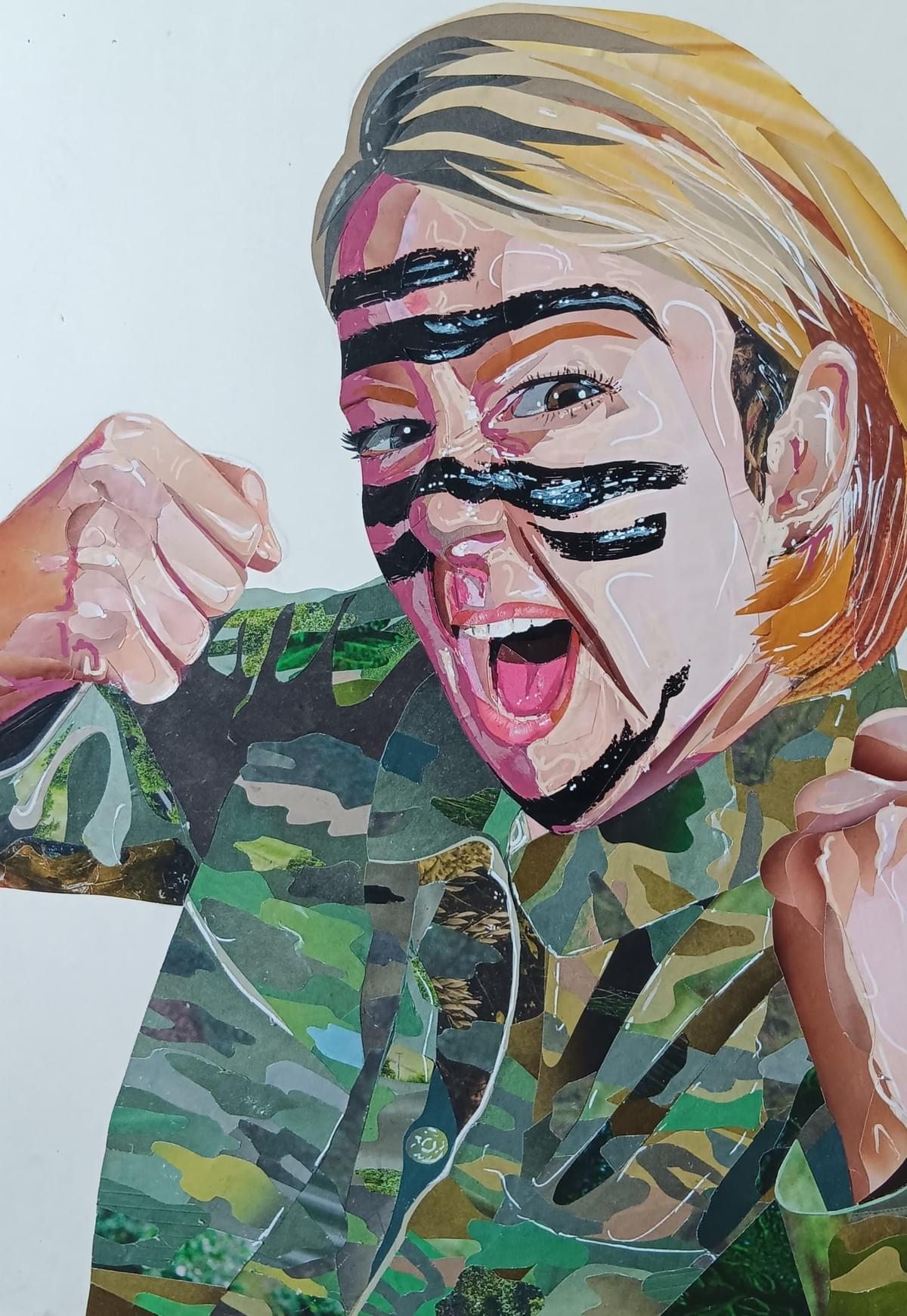
Image: Fighting the Seven Signs of Ageing. Collage and pen on paper. By Nicky Ruddick.
This week, on my Instagram feed, I was served a post which demanded: “Are your hands betraying your age?” I frowned and looked at my hands. One was holding my phone, the other hovering over the screen, ready to scroll on. I put down the phone and looked carefully at them.
The backs of my hands are freckly, quite veiny (but then it’s a warm day), and the skin is a little looser than it used to be. I have long fingers which helped me immensely when I played the piano as a teenager. My nails are shorter than I usually wear them, weakened by months of doing my own gel nails. I can’t feel the tip of my right middle finger after shutting it in a door a few years ago. I had to drill a hole in the nail to release the pressure from the blood blister forming underneath, and for months afterwards when I wrote, I had to stick it out so it made a comically rude gesture. I have numerous scars from being really clumsy and always in a hurry. Years ago, a fortune teller looked at my palms and told me, perhaps seeing a vision of the beauty industry in the 2020s, that I had old hands. I wasn’t bothered. I was working two jobs at the time and was more interested in taking home my pay and spending it on nights out with my friends than keeping my hands nice and smooth.
I have never considered the appearance of my hands before, particularly in relation to my age. They are functional, vital: they allow me to pick up, hold, grasp, stroke, pluck, scratch, chop, smooth, write, draw, sew, type, pick. They help me show affection, express myself, calm a dysregulated child, keep my house tidy(ish), applaud my favourite bands. Why would their appearance matter?
I smiled at the ridiculousness of it all and then I cursed - while I was studying my hands, the full advert had run several times. Now the algorithm would flood my feed with endless adverts for injections to smooth my hands.
In her study Ageist Ideology and Discourses of Control in Skincare Product Marketing (2003), Justine Coupland wrote about how the female face is never just a face but a catalogue of problems to be solved with solutions that are ‘scientised and marketised’. This affects women at every age - there are concerns from dermatologists at the moment about the damage that anti-ageing skincare is having on girls as young as 10 - but it changes when it comes to ageing. The language becomes hostile: the beauty industry is waging a propaganda campaign where it pits our bodies as our enemies, using language usually reserved for military operations: we are told to ‘go to war on wrinkles’ and ‘fight the signs of ageing’. We are asked if our hands are ‘betraying’ us.
Why? All in the name of profit. According to the website researchandmarkets.com the global anti-ageing industry will be worth an estimated 67 billion dollars in 2026 - an increase of 8% from 2025. Back when Coupland wrote that piece, the focus was on our faces. Now, it has become ever more invasive, ever more desperate as it runs out of body parts to exploit. Who’d heard of a bleph until a year or so ago?!
As I look down at my hands writing this, I start to chuckle about what comes next. My knees? Toes? Ears? Elbows?
A few years back I made a collage self-portrait called Fighting the Seven Signs of Ageing. It is me, in a khaki jacket, camouflage face paint across my cheeks, fists bunched and raised ready to fight. It was a playful comment on the language used to get us to spend our money and attention on our ageing bodies. But now I look back on it, I see that it was also about the other side of warfare. It was about defence. Defending my right to have droopy eyelids, fine (and not so fine) lines on my face, a wobbly neck, softer body, and old hands.
In an interview about collage, one of my favourite artists, Wangechi Mutu wrote, "it’s a way of destroying a certain set of hierarchies - the glossy magazines which portrayed women as perfect and idealised. I got to vandalise the narrative and make it something dignified and beautiful”. I love this idea of changing the narrative. I have been a passive consumer of whatever the beauty industry has spent millions of pounds advertising. I’ve wasted money on creams and serums which did nothing except make me feel a bit duped and silly. What if I became less passive and rewrote my own story of ageing?
I think it’s time we fought back but then I don’t want to use the combative language of the anti-ageing industry. What if, instead of fighting, we adopted a more kind, forgiving approach to our ageing bodies? What if we were gentle, loving and appreciative towards her? What if we only ever talked about our own and others’ bodies positively? What if we stopped trying to hide or correct our wobbly bits? What if we filled our feeds with positive stories of women who were doing amazing things and who also happened to have ageing bodies?
It won’t be easy to reverse years of conditioning, but this week I'm going to pay attention to all the extraordinary things my hands do for me. My almost-fifty-year-old hands. Scarred, freckled, veiny, imperfect, and entirely deserving of my gratitude.
About the writer
Nicky Ruddick is a North Devon-based mixed-media artist, writer and workshop facilitator. Her practice combines research, feminist theory and lived experience to explore the challenges women face in an increasingly hostile social climate.
Working across collage, drawing and writing, Nicky creates socially engaged projects that examine themes including ageing, grief and the gender pain gap, often in collaboration with women and other under-represented communities. She graduated with a Master's in Fine Art from Falmouth University in 2025 and enjoys sharing her creative practice through workshops and community projects.
@nickyruddickart
Have a story to share? I'd love to hear from you. The Flush Files welcomes thoughtful, personal stories that explore the many facets of menopause and midlife.