

What Else is True about Menopause?
What Else is True about Menopause?
Reframing the transition as a threshold, not a cliff edge.
By Hannah Lenton
The Flush Files is where we hand the page to someone with a story to tell. Sometimes it will make you laugh, sometimes it will make you think, and often it will do both.
This month's Flush Files, we're looking at menopause from a different perspective. North Devon yoga teacher Hannah Lenton invites us to consider what else might be true about menopause, beyond the familiar conversations about symptoms, loss and decline. Could this transition be a threshold to something new?
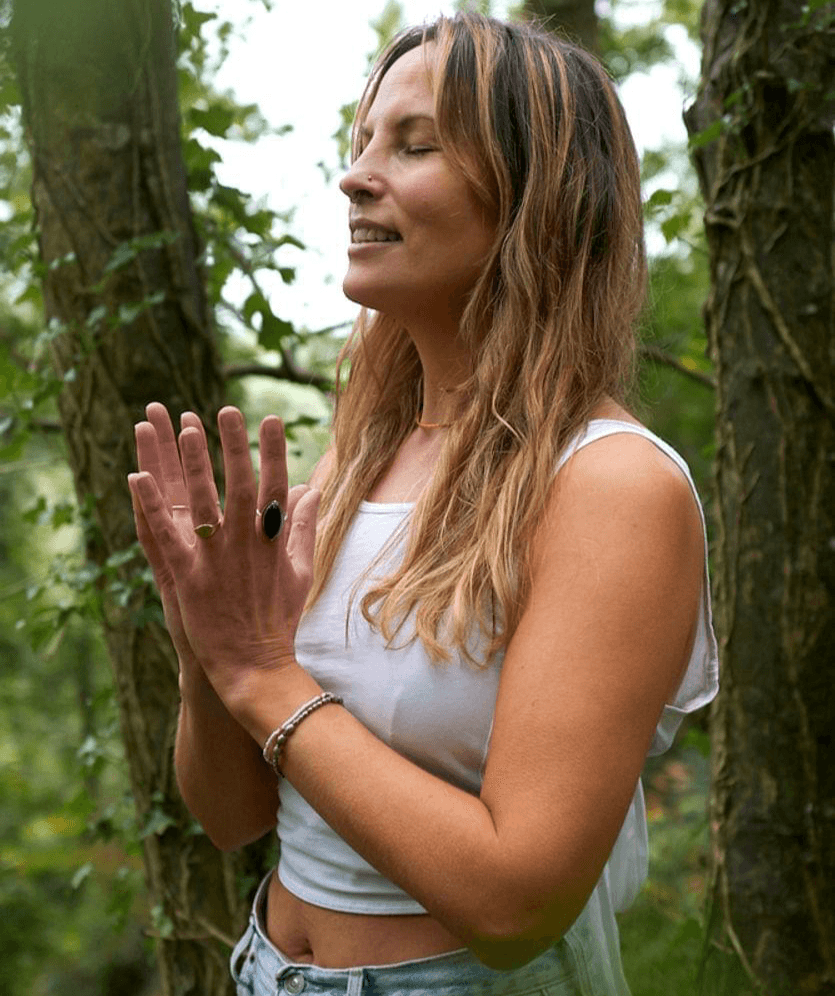
Image: Hannah Lenton, founder of Shanti in Bideford
We’re finally talking about menopause.
This is great news and great timing for all of us just entering the transition.
We are lucky to have all the information we could possibly wish for at our fingertips. We have support groups, new medical research, workplace policies, courses, communities and countless new products on the market, all promising to make things easier for women. But have you ever noticed the language around it?
Symptoms, decline, deficiency, loss, lack, weakening, increased risk…
So much of the conversation is about what we're losing.
Whilst there’s no denying that this period of life can be painful, difficult, scary and confusing, is that the whole story?
Over the last few years, I’ve asked this question of many women who have completed their menopause journey and received a refreshing range of responses. Some of their reflections on the positive outcomes following menopause include:
- Freedom from the menstrual cycle: many were pleased about no more periods, no more PMS, no more leaking through your leggings or planning activities around your cycle.
- Hormonal stability: after decades of living with fluctuating hormones linked to the monthly cycle, many women describe a greater sense of stability once the transition is complete, with fewer monthly fluctuations in mood, energy, hunger and sleep.
- Perspective, agency and confidence: perhaps this is part of ageing in general, or maybe it's a necessary shift that occurs during menopause to help us get through it. Many women report that post-menopause they care far less about what other people think. They become clearer about what matters, find it easier to say no without guilt, set boundaries and ask for what they need.
- Time and mental space: lots of women spoke about finding a renewed sense of purpose in post-menopause. With less mental energy devoted to cycles, sanitary products, contraception and pregnancy concerns, there's more space for creativity, community and work that feels meaningful.
- Connection: going through a shared experience, even a challenging one, is incredibly bonding. Women supporting women through a transition that, until recently, previous generations were expected to suffer through silently, is a beautiful thing to witness. The support and new relationships that form during this phase have the potential to last far beyond any difficult symptoms.
Thanks to the stories I’ve heard from women who have ‘graduated’ from menopause and come out the other side, I remain hopeful that menopause doesn’t have to be only misery and despair. It can also create:
Women who become more confident.
Women who finally start prioritising themselves.
Women who discover their own strength, both mentally and physically.
Women who find new meaningful friendships and hobbies.
Women who start businesses.
Women who leave relationships that no longer serve them.
Women who stop apologising.
Women who support each other.
Women who learn to inhabit their bodies and take up space again.
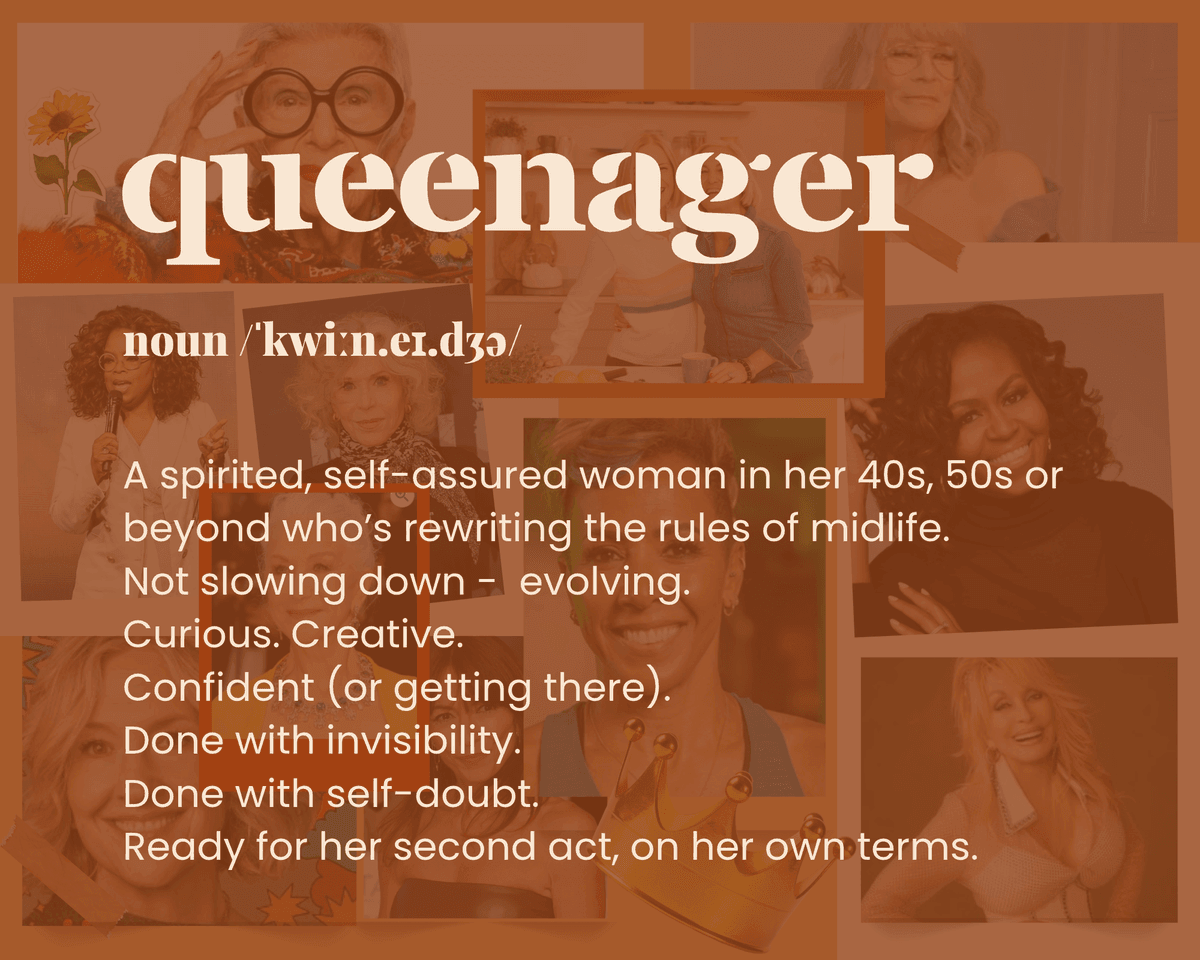
What is a Queenager? By Eleanor Mills, founder of NOON
I’m not the only one seeing this. I love the reframing of this time as the Queenager era, or the ‘Noon’ of our lives, from Eleanor Mills (journalist, author and founder of Noon). This idea challenges the view that women become less relevant in midlife and instead presents a more optimistic story about what women in midlife and beyond are capable of.
Mills and I share the view that whilst the transition through menopause can be messy, uncomfortable and full of challenges, it can also be a chance for a new beginning. We still have more left to give, we still have a right to fun and pleasure, and with the right support, it can be a time for reinvention, adventure and self-discovery.
Queenager: noun /ˈkwiːn.eɪ.dʒə/
A spirited, self-assured woman in her 40s, 50s or beyond who’s rewriting the rules of midlife.
Not slowing down – evolving.
Curious. Creative.
Confident (or getting there).
Done with invisibility.
Done with self-doubt.
Ready for her second act, on her own terms.
We don’t have to look far to find strong and courageous women in midlife doing inspiring things. From Davina McCall and Mariella Frostrup speaking honestly about their experiences so women know they’re not alone, to the women in my classes who tell me every week they’re finding their voice again, I’m surrounded by Queenagers. It fills me with hope.
This is why mindset matters so much. Menopause isn’t only a hormonal shift. For many of us, it’s an identity shift too: a total mind and body recalibration. The woman we were, the one who knew her body, her rhythm and her place in the world, starts to change. If we cling to that version of ourselves, everything that follows can feel like loss.
Yoga philosophy offers two ideas that can help. The first is aparigraha, or non-grasping: the practice of loosening our grip on old roles, expectations and ideas of how our bodies should be, so there’s room for what’s emerging. It doesn’t mean rejecting who we’ve been. It means thanking her and letting her go.
The second is svadhyaya, or self-study: the practice of getting curious about who we are now. What do I need now? What am I ready to put down? What stories am I telling myself about this stage of life, and are they even true?
These are two lessons I encourage the women I work with to explore, both on and off the mat. Together, they help us shed the layers we no longer need to make room for someone new, someone who excites us.
This isn’t about positive thinking or ignoring the challenges. It’s about allowing menopause to be the start of a new chapter rather than the end of an old one.
So, as I approach these transitional years, I want to find a way to embrace the process. To me, that means having the right tools and support to navigate the difficult bits, while also making space for and remaining open to the positive aspects.
So perhaps the next time we hear about ‘symptoms, decline, loss’, we can ask what else is true.
Menopause may be an ending of sorts, but it’s also a threshold, and there are plenty of women who are already on the other side, telling us it’s well worth the crossing.
About the writer
Hannah Lenton is a North Devon-based yoga teacher, writer and founder of Shanti, a yoga and wellness studio in Bideford.
Hannah’s work blends movement, breath and mindful group programmes to help women feel at home in their bodies and in their lives. She specialises in menopause yoga, somatic movement and yoga philosophy, creating classes and programmes that support women through midlife with curiosity, compassion and community.
Passionate about bringing people together, Hannah creates meaningful, fun experiences and safe spaces where women can support, connect and inspire one another. She also loves the outdoors and brings a sense of connection to nature and the seasons into her teaching.
Join Hannah at Shanti or find her online:
Have a story to share? I'd love to hear from you. The Flush Files welcomes thoughtful, personal stories that explore the many facets of menopause and midlife.